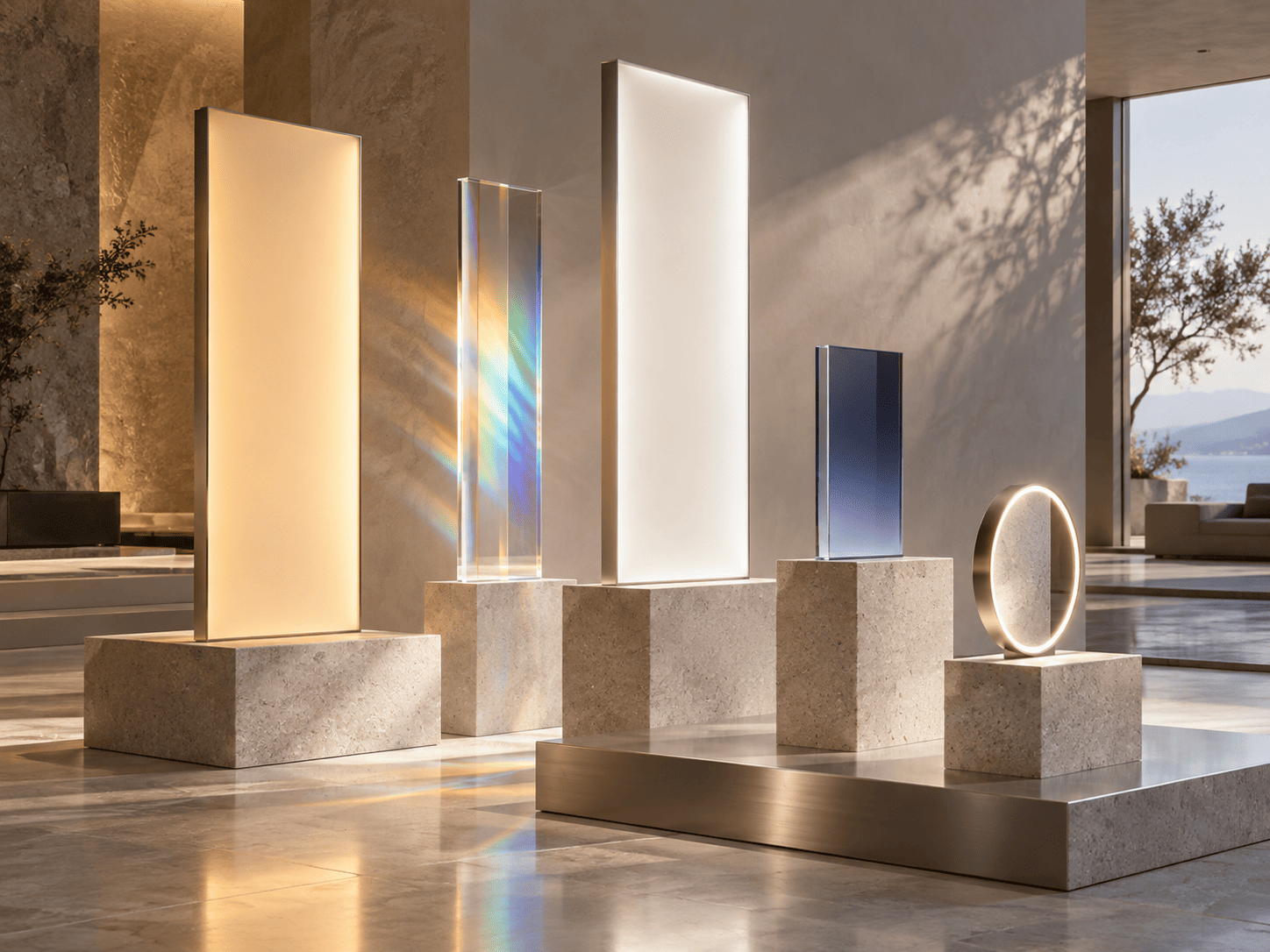
Full-spectrum healthy lighting for hotel and apartment projects is defined by three verifiable thresholds — CRI (Ra) ≥ 90, R9 ≥ 50, and a spectrally continuous SPD with no deep gap in the cyan and deep-red bands — plus a blue-light hazard rating of RG0 or RG1 per IEC TR 62778 at the fixture's fitted distance. A fixture that meets all four is safe to specify for wellness-based design briefs; one that only claims "high CRI" is not.
Full-spectrum light is the foundation of any "healthy lighting" or "wellness lighting" design brief, but the phrase has been diluted into a marketing term. For a hotel developer or apartment project buyer, the job of a selection standard is to turn the phrase into something the procurement team can check against a supplier's datasheet — and be confident the claim will hold when a guest compares a morning in the mirror to natural daylight, or when a project consultant audits the blue-light safety of a corridor glowing at 3 a.m.
This guide sets out the selection standard for full-spectrum LED in guest bathrooms, vanity areas, and apartment living zones, and explains the commercial case for specifying it.
Why Spectral Continuity Matters More Than the CRI Number
Spectral continuity is the difference between light that renders color well and light that only looks bright. A continuous spectral power distribution (SPD) has no deep trough in the cyan band (480–500 nm) or the deep-red band (620–660 nm) — exactly the two regions that standard high-efficiency white LED sacrifices to chase lumens-per-watt. In a bathroom mirror, that missing red is what makes skin look gray-green instead of warm; in a living room, the cyan gap shifts the perceived whiteness of everything under the fixture.
Procurement should not accept "full-spectrum" on the basis of a CRI figure alone. The CRI number is an average, and an average hides a gap. Ask the supplier for the actual SPD curve, plotted as relative spectral power against wavelength from 400 nm to 700 nm. A continuous curve with no cliff-edge drop in cyan or deep red confirms the claim; a smooth number in a brochure confirms nothing.
Takeaway: pin the requirement as "continuous SPD, no spectral gap greater than X% in the 480–500 nm and 620–660 nm bands," not as a vague "full-spectrum" label. Ask for the spectrophotometer report that substantiates it.
CRI and R9: The Two Numbers That Separate Healthy Light from Adequate Light
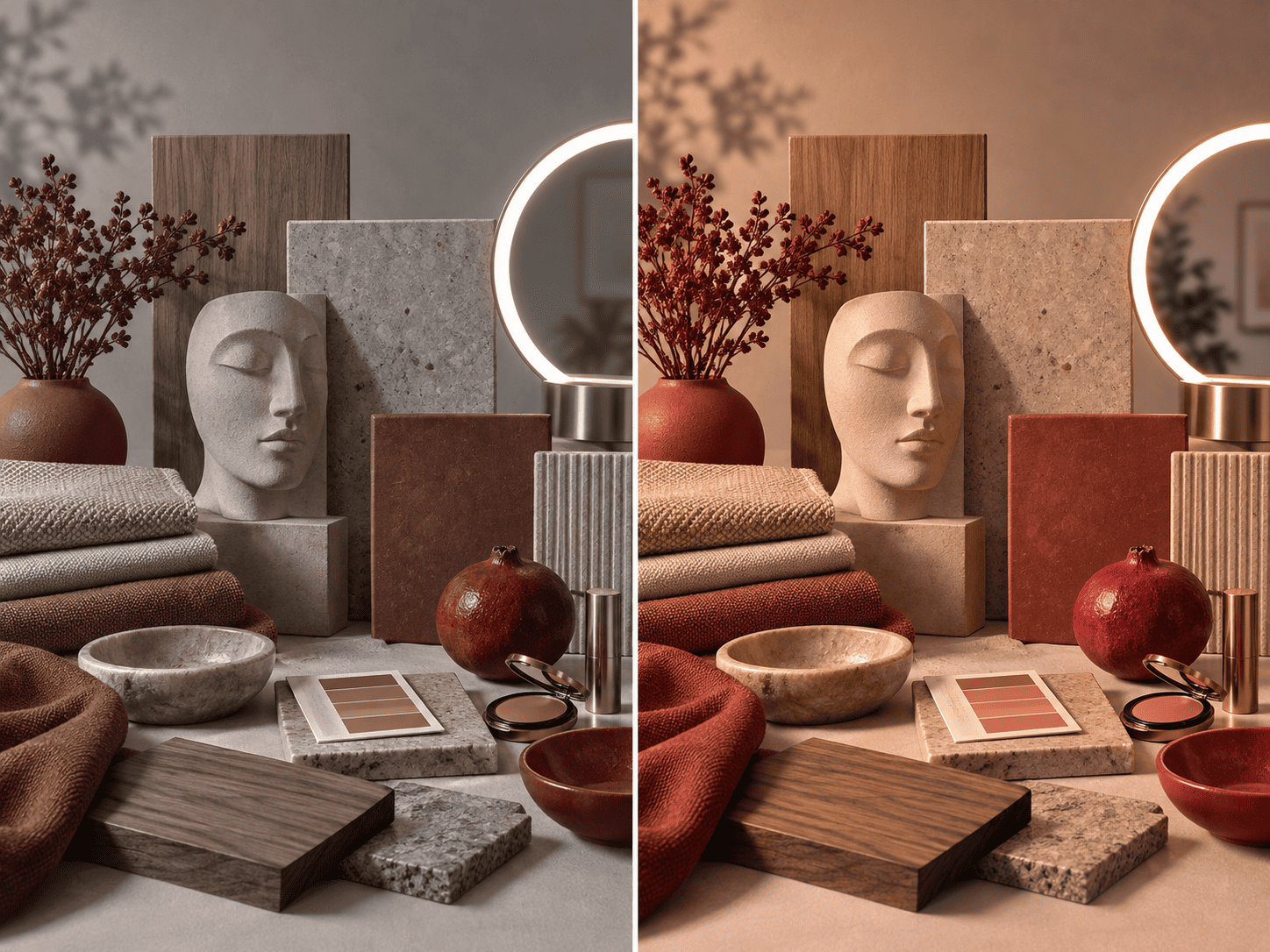
CRI (Ra) is the average of the first eight pastel test-color samples, R1 through R8. R9 is a separate metric for saturated red, and it is the number cheap "high-CRI" panels fail hardest on. The two must be specified together because Ra alone does not predict skin-tone accuracy or the warmth of wood, leather, and cosmetics — the surfaces that define a hotel's or apartment's perceived quality.
The selection standard for healthy lighting is CRI (Ra) ≥ 90 and R9 ≥ 50, verified at the panel level. Ra ≥ 90 ensures the general color rendering passes a human-preference bar; R9 ≥ 50 ensures the deep-red content that keeps faces, makeup, and warm finishes from looking flat. A panel that quotes Ra 90 but R9 below 20 will still leave occupants looking washed out — a defect a hotel guest notices in the mirror every morning.
> Why does R9 matter when Ra is already 90? Ra is an average of pastel samples and can be gamed by panels that under-render deep red. R9 isolates saturated red, the single most important band for skin tone, cosmetics, and warm materials, so a panel with Ra 90 and R9 < 20 still renders faces flat.
Specify both figures, and require them on the same spectrophotometer report from the same panel batch. A supplier who can quote only one is telling you the other failed.
Blue-Light Hazard: The Compliance Axis Most Briefs Overlook
Blue-light hazard is the photobiological risk from short-wavelength light (roughly 400–500 nm), and it is the axis that separates a wellness claim from a liability. High-CCT, high-blue-content light suppresses melatonin and, at sustained exposure, carries a retinal photobiological risk that is assessed against IEC TR 62778 (and its predecessor IEC 62471) by classifying the fixture into a risk group at a reference distance.
For hotel and apartment projects, the selection standard should require an RG0 (exempt) rating for fixtures in close-proximity use — vanities, bedside reading, bathroom mirrors where the occupant is within a meter of the source — and accept RG1 (low risk) only for ceiling-mounted fixtures where the reference distance is beyond normal reach. Anything rated RG2 at the fitted distance should be excluded from residential and hospitality applications without a clear mitigation in the lighting design.
The honest engineering point: a warm, full-spectrum fixture does not eliminate blue content — it controls the proportion and the total dose. The melanopic ratio (melanopic daylight-equivalent to photopic lux) is the metric to watch on the circadian side, and it climbs steeply as CCT rises past 4000K. A tunable fixture that shifts warm in the evening is the practical lever for limiting evening blue-light dose without asking procurement to manage separate room-level fixtures.
> What does RG0 versus RG1 actually mean for a hotel fixture? Per IEC TR 62778, RG0 means the fixture is exempt from blue-light hazard at the reference distance, so it can be used in close-proximity applications like vanity lighting. RG1 is low-risk and acceptable for ceiling fixtures; RG2 should be excluded from hospitality and residential use.
Specify the risk group at the fixture's actual fitted distance, not at a lab distance that never occurs in the project. A vanity mirror rated RG0 at 200 mm is a different spec from one rated RG0 only at 1 m.
A Four-Axis Selection Standard for Hotel and Apartment Projects
The following table consolidates the selection standard into four axes a procurement team can put directly into an RFQ and check against a supplier's returned datasheet and reports.
| Axis | Parameter | Residential/Hospitality Threshold | Verification |
|---|
| Color rendering | CRI (Ra) | ≥ 90 | Spectrophotometer report |
| Deep-red rendering | R9 | ≥ 50 | Same report, R9 value |
| Spectral continuity | SPD gap in cyan/deep-red | No cliff-edge gap | SPD curve, 400–700 nm |
| Blue-light safety | Risk group (IEC TR 62778) | RG0 (close-proximity) / RG1 (ceiling) | Photobiological test report at fitted distance |
Specify these four parameters together, because they interact. A high-Ra panel can still fail R9; a continuous SPD can still carry a high blue-light dose at high CCT; and a tunable fixture that meets all four at 2700K can drift out of spec at 6500K unless the binning and mixing discipline is pinned in the supplier agreement.
The Commercial Case: Why Healthy Lighting Specs Justify the Cost
Healthy lighting carries a real per-unit cost premium — broadband red phosphors, tighter binning, and dual-channel drivers all add cost over a standard 80-CRI panel. The commercial case is that these specifications protect and enhance the project's own revenue, not just the occupant's comfort.
For hotels, the argument is direct: color-accurate vanity and bathroom lighting is one of the most frequently cited differentiators in guest reviews, and a tunable fixture that shifts warm at night lets a property market "circadian-friendly rooms" without redesigning the MEP. For multi-family apartments and senior-living projects, healthy lighting is increasingly a wellness-checklist item in certification frameworks that command a premium and shorten time-to-lease. In both cases, the marginal cost of a full-spectrum fixture is recovered across the first lease or booking cycle through higher guest satisfaction scores and faster occupancy.
The counterpoint to keep the budget honest: do not over-buy. A full-spectrum, tunable fixture earns its cost in the spaces where occupants spend sustained time at close range — bathroom vanities, dressing areas, bedside, and mirrors. In a corridor or utility space, a good 90-CRI fixed fixture is usually sufficient, and a tunable RG0 fixture is wasted engineering.
Takeaway: route the healthy-lighting budget to the close-proximity, high-dwell spaces, and specify the four-axis standard there. That is where both the wellness claim and the review score are actually decided.
What to Ask the Factory Before Approving Samples
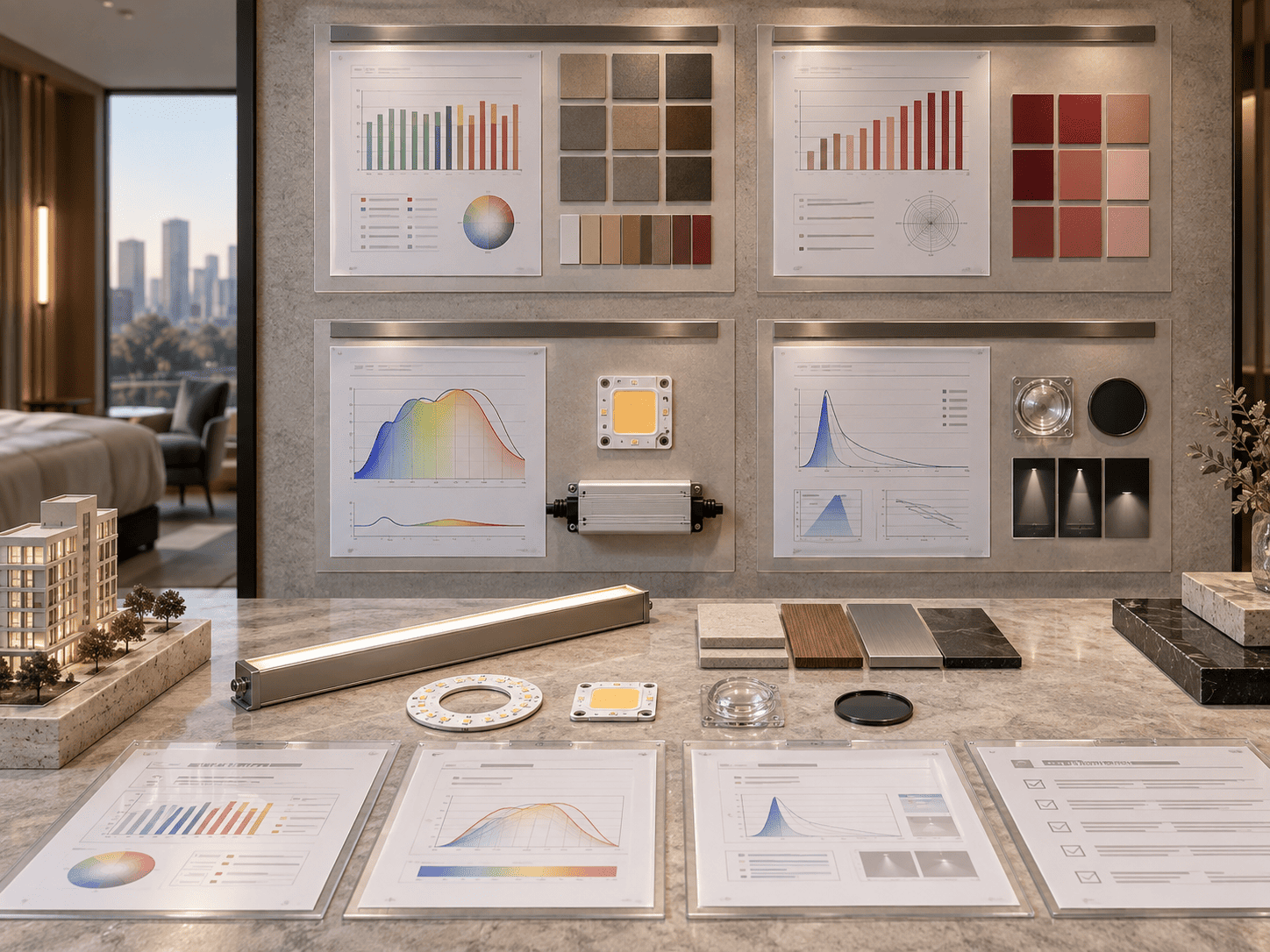
Before sample approval, lock the following into the quotation and supplier agreement. Each item maps to a specific axis in the selection standard, and each has a source document the factory must supply rather than claim:
- CRI (Ra) ≥ 90 and R9 ≥ 50, with a spectrophotometer report for the exact panel model and bin.
- The SPD curve plotted from 400 to 700 nm, confirming no cliff-edge gap in the cyan (480–500 nm) or deep-red (620–660 nm) bands.
- The IEC TR 62778 photobiological test report stating the risk group at the fixture's fitted distance, plus the reference distance it was measured at.
- For tunable fixtures: the CCT range, the MacAdam bin step for both LED strings, and the melanopic ratio or blue fraction at 2700K and 6500K endpoints.
- The IP rating for bathroom zones (IP44 minimum for zone 2), and the certification scope for the destination market — CE (LVD + EMC), SAA, or regional equivalent — confirmed with actual test reports.
One honest limit to record in the brief: a mirror or vanity fixture alone cannot deliver a complete circadian program. The fixture is the close-proximity color and safety component; the full wellness outcome also depends on room-level fixtures, dimming schedules, and controls. Specify the mirror as the precision instrument, not as the entire system, and the budget and the claim stay aligned.
FAQ
What is the minimum CRI and R9 for healthy lighting in a hotel or apartment? CRI (Ra) ≥ 90 and R9 ≥ 50, verified on the same spectrophotometer report, with R9 specified explicitly because Ra alone does not guarantee accurate skin-tone and warm-material rendering.
What does spectral continuity mean, and why does it matter? A spectrally continuous SPD has no deep trough in the cyan (480–500 nm) or deep-red (620–660 nm) bands, which standard high-efficiency LED sacrifices for lumens. Those gaps are what make faces look washed out and warm finishes look flat under the light.
How do I control blue-light hazard in a hospitality or residential project? Require a photobiological risk rating of RG0 (exempt) for close-proximity fixtures like vanities and mirrors, and accept RG1 only for ceiling fixtures at a fitted distance beyond normal reach, verified against IEC TR 62778 at the actual fitted distance rather than a lab distance.
Is full-spectrum lighting worth the cost premium? Yes in close-proximity, high-dwell spaces — bathroom vanities, mirrors, dressing areas, and bedside — where it drives guest review scores, supports wellness-based marketing, and shortens occupancy or lease cycles. In corridors and utility spaces, a fixed 90-CRI fixture is usually sufficient and the tunable RG0 premium is unnecessary.
Specifying Full-Spectrum Healthy Lighting for Your Project
For your next hotel or apartment specification, shortlist suppliers against the four-axis standard — CRI ≥ 90, R9 ≥ 50, continuous SPD, and RG0/RG1 blue-light safety — and require the underlying reports, not the brochure claims. Contact RATO LED Mirror with your mirror dimensions, glass thickness, driver requirements, and target market, and we will quote a full-spectrum configuration with the spectrophotometer and photobiological test reports needed to pass a wellness-design audit.